|
Tanzanite
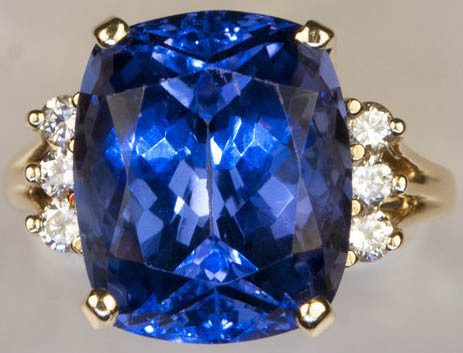
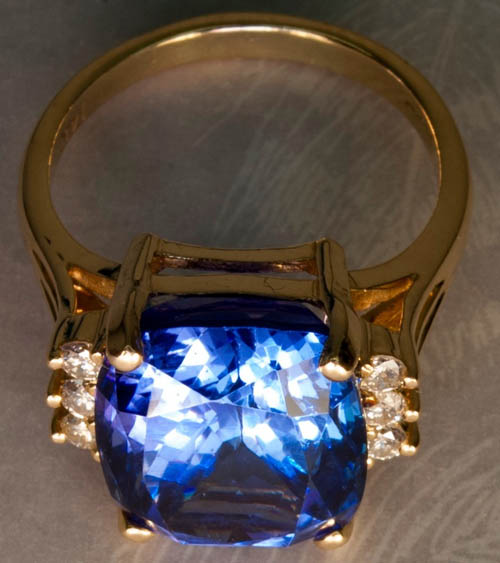
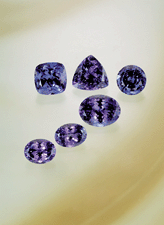 One of the Newest and Bluest of Gems... Tanzanite is the "new kid on the block" of the gemstone kingdom. Discovered in Tanzania in 1967 and introduced to the American market in 1969, tanzanite has catapulted to incredible popularity in a very short amount of time. It was named in honor of the country in which it was found and introduced in the United States for the first time by Tiffany & Co. Available in colors ranging from blue to violet to purple, few gems can rival tanzanite’s depth of hue and purity of color.
Tanzanite owes much of its beauty to an unusual gemological property called pleochroism, the ability to exhibit more than one color. When viewed from different directions, tanzanite can look blue, violet, purple, bronze or gray. Before a tanzanite is faceted, the gemstone cutter studies the crystal and decides which directional orientation will show the best color. Most cutters will try to produce a pure blue tanzanite, but cutting to achieve a blue color sacrifices a lot of weight and results in a smaller and more costly finished gem. Yet the blue of a well-cut tanzanite is so breathtaking that most agree the sacrifice is well worth it. Tanzanite shows its strongest colors in sizes of 4 to 5 carats and larger. Smaller tanzanites are usually soft blue, light violet or lilac purple.
|
|
The Following Tanzanites are Available For
$ALE Now:
|
 |
|
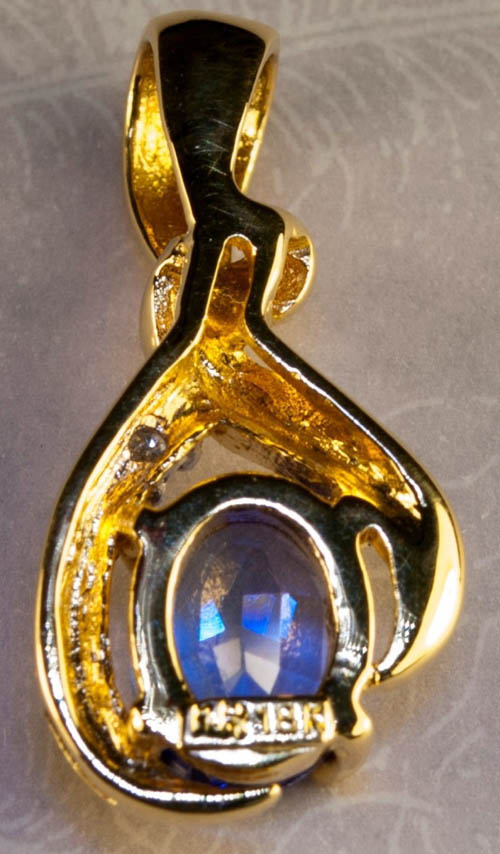
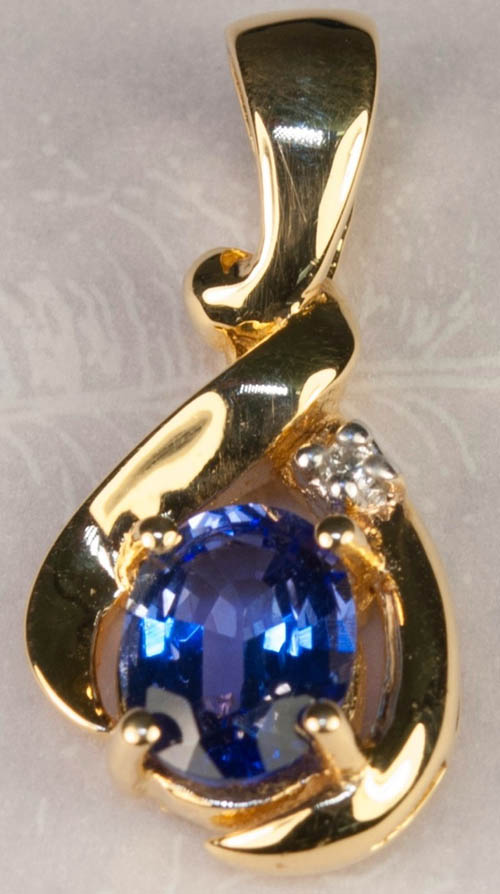
Faceted
Tanzanite & Diamond
Pendant
|
|
 |
|


 FACETS